
It’s Time to RELIEVE Your Neuropathy Symptoms!
Did You Know That Pain, Numbness, Tingling,
and Burning Are All Signs of Neuropathy?
It’s Time to STOP Living With Pain!
Did You Know That Pain, Numbness, Tingling, and Burning Are All Signs of Neuropathy?
RELIEVE NUMBNESS
REDUCE BURNING
IMPROVE SLEEP
NO ELECTRIC PAIN
STOP NUMBNESS
END BURNING PAIN
IMPROVE SLEEP
END SHARP ELECTRIC PAIN
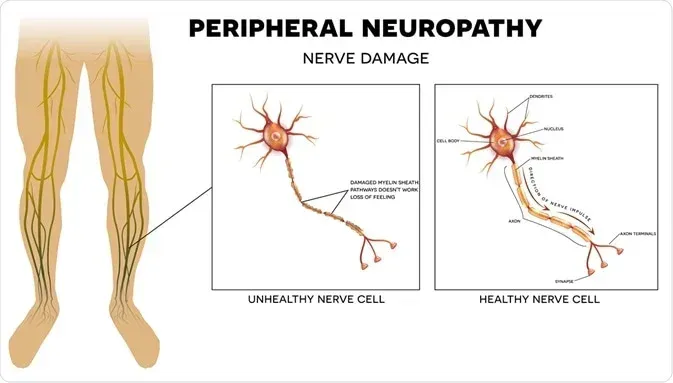
What is Neuropathy?
Neuropathy, or nerve damage, can result from a wide range of conditions such as diabetes and even treatments like chemotherapy.
In fact, neuropathy, which is sometimes referred to as peripheral neuropathy, is not a single health condition but rather a term used to describe a range of health problems involving damage to the peripheral nerves, as well as the symptoms of those issues.
While the group of conditions is irreversible, you can take steps to help prevent neuropathy or manage it through diet, lifestyle, and treatment.
What is Neuropathy?
Neuropathy, or nerve damage, can result from a wide range of conditions such as diabetes and even treatments like chemotherapy.
In fact, neuropathy, which is sometimes referred to as peripheral neuropathy, is not a single health condition but rather a term used to describe a range of health problems involving damage to the peripheral nerves, as well as the symptoms of those issues.
While the group of conditions is irreversible, you can take steps to help prevent neuropathy or manage it through diet, lifestyle, and treatment.
What IF?
...there is a treatment that can reduce any tingling, burning, or numbness in the hands and feet without the use of needles or medications?
Neuropathy CAN be improved before it’s too late.
Some of the most severe cases we’ve successfully treated have lasted for years.
And the technology we use has been compassionately-designed to ensure intensity while providing zero downtime, unlike nerve repair surgery.
What IF?
...there is a treatment that can reduce any tingling, burning, or numbness in the hands and feet without the use of needles or drugs?
Neuropathy CAN be improved before it’s too late.
Some of the most severe cases we’ve successfully treated have lasted for a decade.
And the technology we use has been compassionately-designed to ensure intensity while providing zero downtime, unlike nerve repair surgery.
Our Neuropathy Therapy Works to Relieve Symptoms.
➡️ Burning Pain ➡️ Cramping ➡️ Numbness ➡️ Sharp Electric Pain ➡️ Hurting When Walking ➡️ Balance Problems
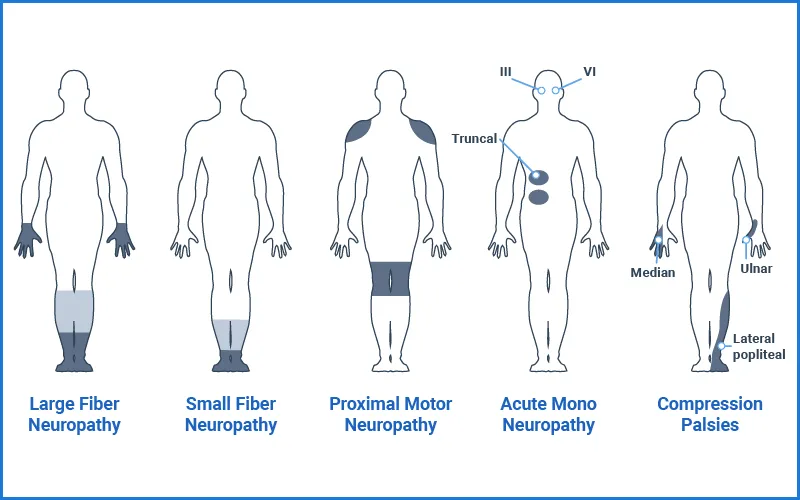
Traumatic injuries, infections, metabolic problems, inherited causes, exposure to toxins, chemotherapy and diabetes can all lead to neuropathy, as well. Damage or disruption to both voluntary and involuntary peripheral nerves can be involved in neuropathy.
Sensory and motor nerves can be affected.
Advancements in neuropathy treatments have led to the improvement of symptoms without using harmful medications or surgery.
Non-medication treatment for nerve pain and discomfort is now available. And this is all done in the safety of our office and your home!
Our Neuropathy Therapy Works to Relieve Symptoms.
➡️ Burning Pain ➡️ Cramping ➡️ Numbness ➡️ Sharp Electric Pain ➡️ Hurting When Walking ➡️ Balance Problems
Traumatic injuries, infections, metabolic problems, inherited causes, exposure to toxins, chemotherapy and diabetes can all lead to neuropathy, as well. Damage or disruption to both voluntary and involuntary peripheral nerves can be involved in neuropathy. Sensory and motor nerves can be affected.
Advancements in neuropathy treatments have led to the improvement of symptoms without using harmful medications or surgery. Non-medication treatment for nerve pain and discomfort is now available. And this is all done in the safety of our office and your home!
No Drugs. No Pain. No Surgery.
Non-invasive, Drug-Free Relief! Neuropathy Treatment Free SCREENING.
Get your life back from Neuropathy Symptoms TODAY!
The treatment for peripheral neuropathy can vary widely depending on its cause. Other factors can also affect treatment, including your medical history, personal preferences and more. Your healthcare provider is the best person to tell you more about the treatment(s) they recommend and the likely recovery timeline.
No Drugs. No Pain. No Surgery.
Non-invasive, Drug-Free Relief! Neuropathy Treatment Free SCREENING.
Get your life back from Neuropathy Symptoms TODAY!
The treatment for peripheral neuropathy can vary widely depending on its cause. Other factors can also affect treatment, including your medical history, personal preferences and more. Your healthcare provider is the best person to tell you more about the treatment(s) they recommend and the likely recovery timeline.
When to See a Doctor?
Seek medical care right away if you notice unusual tingling, weakness or pain in your hands or feet. Early diagnosis and treatment offer the best chance for controlling your symptoms and preventing further damage to your peripheral nerves.
When to See a Doctor?
Seek medical care right away if you notice unusual tingling, weakness or pain in your hands or feet. Early diagnosis and treatment offer the best chance for controlling your symptoms and preventing further damage to your peripheral nerves.
There Are Long-Term Risks of Peripheral Neuropathy
You might think you can put up with the symptoms of a peripheral neuropathy,
but if the underlying cause of PN is not treated, it can cause some long-term problems:
➡️ Neuropathy of a sensory nerve can cause long-term numbness or inability to feel pain or discomfort. This can make it difficult for you to know if you have accidentally hurt yourself — like if you step on something sharp — and can lead to infection. In serious cases, the injury and infection can become severe and can even require surgery.
➡️ Nerve deterioration from peripheral neuropathy weakens the connected muscles. That can cause paralysis, which may cause difficulty moving the toes, foot drop and hand weakness. Weakness can also affect muscles in the thighs, arms and elsewhere.
➡️ Loss of nerve connection can cause muscles to shrink in size, as well as weaken. This especially happens in the feet, lower legs and hands with peripheral neuropathy. Sometimes there are deformities of the feet and hands because of muscle loss.
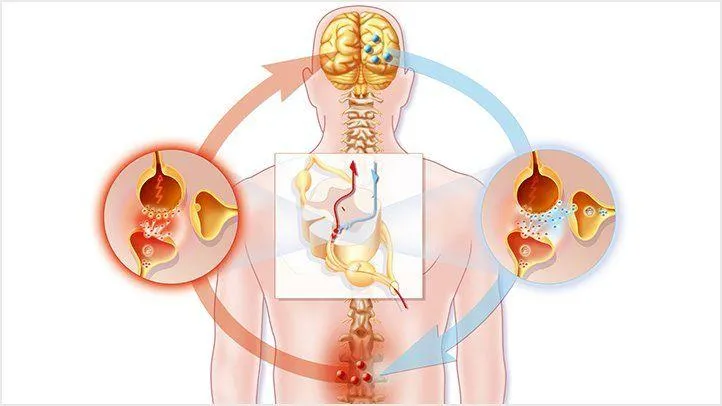
➡️ Nerve damage from peripheral neuropathy can cause malfunctions in how and when nerves send pain signals, making pain signals more intense (hyperalgesia) or happen too easily (allodynia). It can even cause nerves to generate pain signals spontaneously. This is known as “neuropathic” pain, and it’s the most noticeable and disruptive symptom of peripheral neuropathy.
➡️ Nerves also carry sensations that your brain uses to keep track of the location of your hands and feet. You’re not consciously aware of these sensations, but they’re critical for balance and coordination. Without these sensations, you can experience a loss of balance, especially in the dark, and clumsiness with your hands.
➡️ Nerves can’t send or relay sensory signals, causing the loss of specific types of sensations. An example of this would be picking up a cold pop can, but not feeling the smoothness or coldness of the can, or not being able to feel the texture of carpet or the temperature of the floor through your feet.
➡️ Neuropathy involving a motor nerve can cause muscle wasting and weakness. Weakness can make it difficult to do your usual daily activities, and it can also increase your risk of falling.
➡️ Your body automatically manages its internal temperature, using sweating to shed heat. Peripheral nerve damage can cause you to sweat too much or not enough. That can lead to dryness and scaling on your feet, or excessive sweating after eating.
➡️ Autonomic signals control your bowel and bladder without you having to think about them. Nerve fiber disruption can affect bowel movements (constipation or diarrhea), and can occasionally affect bladder control, too.
➡️ Sometimes, nerves that lose their connection to the brain because of peripheral neuropathy become hyperactive on their own, causing cramps.
➡️ Your autonomic nervous system controls sexual arousal. That’s why autonomic problems can cause
sexual dysfunction.
➡️ Your body automatically manages blood pressure, but damage to your peripheral nerves can disrupt this. That can cause sudden drops in blood pressure or increases in heart rate, especially when you stand up.
There Are Long-Term Risks of Peripheral Neuropathy
You might think you can put up with the symptoms of a peripheral neuropathy,
but if the underlying cause of PN is not treated, it can cause some long-term problems:
➡️ Neuropathy of a sensory nerve can cause long-term numbness or inability to feel pain or discomfort. This can make it difficult for you to know if you have accidentally hurt yourself — like if you step on something sharp — and can lead to infection. In serious cases, the injury and infection can become severe and can even require surgery.
➡️ Nerve deterioration from peripheral neuropathy weakens the connected muscles. That can cause paralysis, which may cause difficulty moving the toes, foot drop and hand weakness. Weakness can also affect muscles in the thighs, arms and elsewhere.
➡️ Loss of nerve connection can cause muscles to shrink in size, as well as weaken. This especially happens in the feet, lower legs and hands with peripheral neuropathy. Sometimes there are deformities of the feet and hands because of muscle loss.
➡️ Nerve damage from peripheral neuropathy can cause malfunctions in how and when nerves send pain signals, making pain signals more intense (hyperalgesia) or happen too easily (allodynia). It can even cause nerves to generate pain signals spontaneously. This is known as “neuropathic” pain, and it’s the most noticeable and disruptive symptom of peripheral neuropathy.
➡️ Nerves also carry sensations that your brain uses to keep track of the location of your hands and feet. You’re not consciously aware of these sensations, but they’re critical for balance and coordination. Without these sensations, you can experience a loss of balance, especially in the dark, and clumsiness with your hands.
➡️ Nerves can’t send or relay sensory signals, causing the loss of specific types of sensations. An example of this would be picking up a cold pop can, but not feeling the smoothness or coldness of the can, or not being able to feel the texture of carpet or the temperature of the floor through your feet.
➡️ Neuropathy involving a motor nerve can cause muscle wasting and weakness. Weakness can make it difficult to do your usual daily activities, and it can also increase your risk of falling.
➡️ Your body automatically manages its internal temperature, using sweating to shed heat. Peripheral nerve damage can cause you to sweat too much or not enough. That can lead to dryness and scaling on your feet, or excessive sweating after eating.
➡️ Autonomic signals control your bowel and bladder without you having to think about them. Nerve fiber disruption can affect bowel movements (constipation or diarrhea), and can occasionally affect bladder control, too.
➡️ Sometimes, nerves that lose their connection to the brain because of peripheral neuropathy become hyperactive on their own, causing cramps.
➡️ Your autonomic nervous system controls sexual arousal. That’s why autonomic problems can cause
sexual dysfunction.
➡️ Your body automatically manages blood pressure, but damage to your peripheral nerves can disrupt this. That can cause sudden drops in blood pressure or increases in heart rate, especially when you stand up.
What Our Patients Have To Say
I have to say some of the symptoms that I have experienced which includes burning, tingling and prickling. I've had sharp shooting pains which kind of feels like an electrical shock and in my feet and sometimes in my hands. I was always told to diet and take Cabapentin for the pain by my doctor and specialist. This place has given me hope again that they can correct this by the treatments they have to offer. They explained how they can help me improve my way of life. I suggest you at least go and listen to what they can do for you.
David
After doing hand treatments for 5 weeks I felt the PEMF machine in my hand! My doctors told me I would never get the feeling back because I have 100% nerve loss. I was given pain medicine and told to just accept and deal with it. THEY WERE WRONG!!! After 4 years of nothing, I can see a bright light at the end of the tunnel! Long story short, never give up!
Angela
Incredible atmosphere! The Dr. Is conscious in all aspects of a person! He is dedicated and passionate in helping people in the best way possible. The staff is phenomenal! The energy is is uplifting, positive, definitely a healing environment!! They are fun! They offer a Monthly Bingo night for patients and friends. There's bingo played in the office as well for patients. I am so privileged to be a part of their family.
Stacy
I'm happy with my results. I've just completed 12 weeks and looking forward to continued improvement, but had some improvement even early on. The program requires commitment on several levels but it has been worth it for me. The staff is great--always friendly and professional.
Richard
What Our Patients Have To Say
Incredible atmosphere! The Dr. Is conscious in all aspects of a person! He is dedicated and passionate in helping people in the best way possible. The staff is phenomenal! The energy is is uplifting, positive, definitely a healing environment!! They are fun! They offer a Monthly Bingo night for patients and friends. There's bingo played in the office as well for patients. I am so privileged to be a part of their family.
Stacy
I'm happy with my results. I've just completed 12 weeks and looking forward to continued improvement, but had some improvement even early on. The program requires commitment on several levels but it has been worth it for me. The staff is great--always friendly and professional.
Richard
After doing hand treatments for 5 weeks I felt the PEMF machine in my hand! My doctors told me I would never get the feeling back because I have 100% nerve loss. I was given pain medicine and told to just accept and deal with it. THEY WERE WRONG!!! After 4 years of nothing, I can see a bright light at the end of the tunnel! Long story short, never give up!
Angela
I have to say some of the symptoms that I have experienced which includes burning, tingling and prickling. I've had sharp shooting pains which kind of feels like an electrical shock and in my feet and sometimes in my hands. I was always told to diet and take Cabapentin for the pain by my doctor and specialist. This place has given me hope again that they can correct this by the treatments they have to offer. They explained how they can help me improve my way of life. I suggest you at least go and listen to what they can do for you.
David

If you're seeking a non-surgical, non-invasive therapy for neuropathy, look no further! Our advanced medical technologies and individualized care plans for neuropathy treatments address the underlying damage that causes the symptoms of neuropathy such as numbness, pain and the "pins and needles" sensation, common in the hands and feet.
Our Therapies Treat A Wide Range of Neuropathy Conditions
Onset of numbness, prickling or tingling in your hands or feet
Sharp, jabbing, throbbing or burning pain
Extreme sensitivity to touch
Lack of coordination and falling
Muscle Weakness
Paralysis of motor nerves
Poor quality and lack of sleep
Our Therapies Treat A Wide Range of Neuropathy Conditions
Onset of numbness, prickling or tingling in your hands or feet
Sharp, jabbing, throbbing or burning pain
Extreme sensitivity to touch
Lack of coordination and falling
Muscle Weakness
Paralysis of motor nerves
Poor quality and lack of sleep
If you're seeking a non-surgical, non-invasive therapy for neuropathy, look no further! Our advanced medical technologies and individualized care plans for neuropathy treatments address the underlying damage that causes the symptoms of neuropathy such as numbness, pain and the "pins and needles" sensation, common in the hands and feet.
RegenRx Medical - Frisco, Texas
DISCLAIMER: THIS CONSULTATION IS FOR INFORMATIONAL AND EDUCATIONAL PURPOSES ONLY. THERE ARE NO TREATMENTS INCLUDED WITH THIS CONSULTATION. THE INFORMATION CONTAINED IN THIS CONSULTATION DOES NOT CONSTITUTE THE RENDERING OF HEALTHCARE ADVICE OR THE PROVISION OF TREATMENT OR TREATMENT RECOMMENDATIONS. ATTENDING THIS CONSULTATION DOES NOT ESTABLISH A PROFESSIONAL RELATIONSHIP WITH Niva Health OR ANY MEMBER OF OUR STAFF. ANY MEDICAL OR HEALTHCARE RELATED DECISION SHOULD BE MADE IN CONSULTATION WITH YOUR QUALIFIED HEALTHCARE PROVIDER. THE INFORMATION CONTAINED IN THIS CONSULTATION HAS NOT BEEN EVALUATED BY THE FDA. THIS INFORMATION IS NOT INTENDED TO TREAT OR DIAGNOSE.
THERAPIES WILL BE COMPLETED BY A LICENSED PROVIDER.
© 2023 | | all rights reserved.